 Dhaka, Bangladesh


 SANn Asia Desk


Microplastics in the Yamuna in Delhi come with a complex mixture of chemicals, including pharmaceutical residues, pesticides and industrial pollutants, many of them classified as hazards to human health and the environment, according to a new University of Delhi study.
Published in the Journal of Hazardous Materials Advances, the study sampled eight locations along a 48.8km stretch of the river, from Palla where it enters Delhi to Asgarpur Jagir where it leaves, covering farmland, residential, industrial, recreational and forested areas.
Researchers recovered 2,289 microplastic particles, an average of 3.18 per litre, and identified 321 chemical compounds. Of 50 compounds found at four or more sites, 36 carry hazard classifications for risks such as cancer, reproductive harm, acute toxicity and damage to aquatic life.
Seven compounds, including 2-naphthylamine, lidocaine and monobutyl phthalate, were present at every site. The team also found medicines such as domperidone and telmisartan, and farm chemicals including diuron and thiamethoxam.
Co-author Radhey Shyam Sharma, head of the university's Department of Environmental Studies, said the problem should be studied through the lens of "mixture toxicity", looking beyond the particles themselves to the chemicals they carry.
Source: The Hindu · Source date: 2026-11-17.
Report compiled by the SANn Asia desk from the linked source.
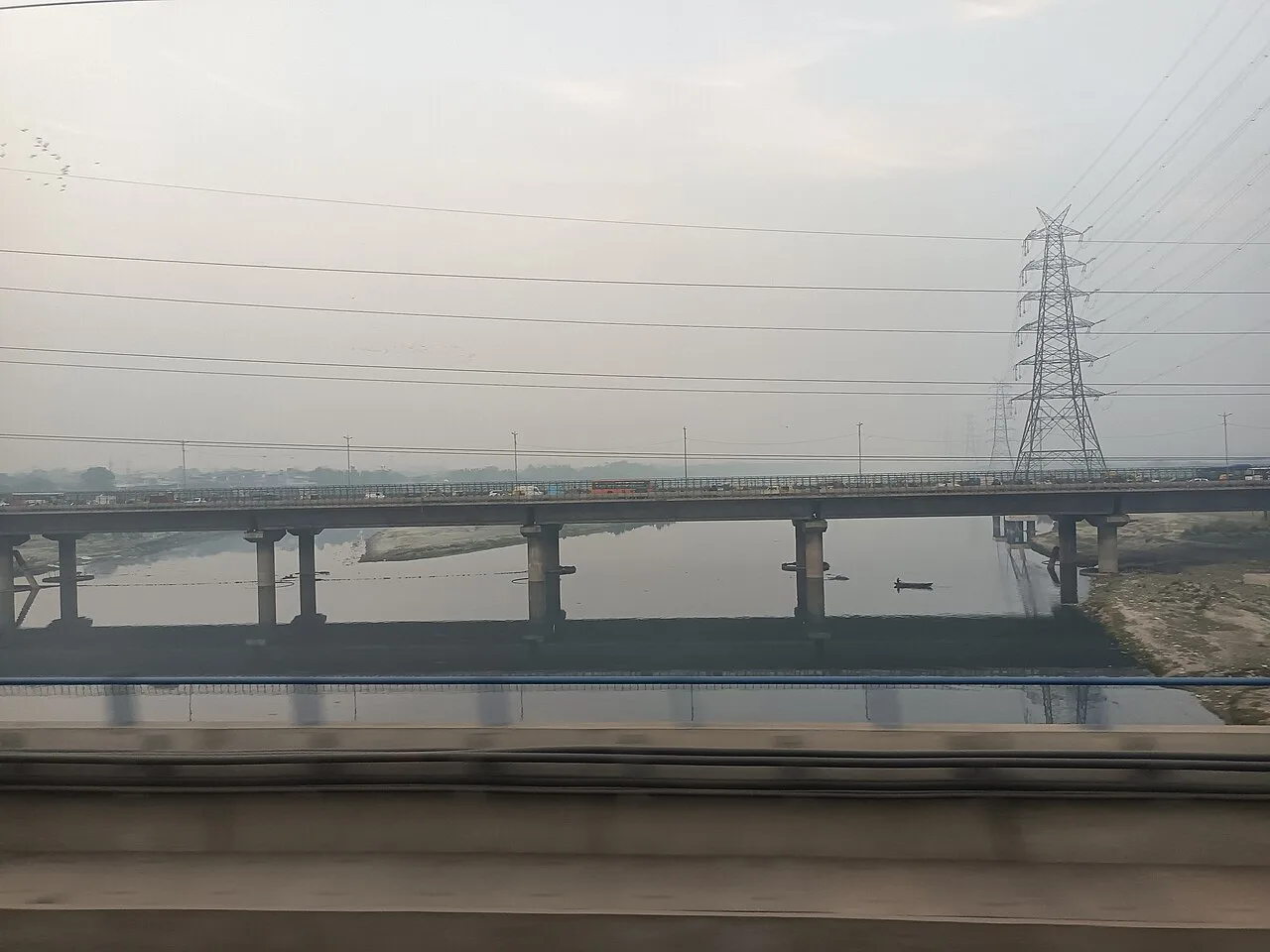
File photo: Delhi's Yudhisthir Setu Bridge over the Yamuna River as seen from Delhi Metro's Red Line.jpg — Kool Nerd 123. Wikimedia Commons original · CC BY 4.0. Resized; cropped in cards. Representative image, not a photograph of the reported event.
